COMMERCIAL
CONCRETE REPAIR
IN PLANO, TX.
Plano's Legacy Business District was conceived by Ross Perot in the early 1980s. Frito-Lay's campus has been here since 1985. AT&T's $1.35 billion global HQ is going up now. When corporate tenants at this standard evaluate a building, concrete integrity is not optional — and original sealant systems installed 30–40 years ago are past due.
What Commercial Concrete Repair Includes
Comprehensive concrete restoration for commercial facilities — from surface spalls to structural member repair.
Spall & Delamination Repair
We map delaminated zones by sounding, remove all unsound concrete to sound substrate, treat exposed rebar with corrosion inhibitor, and restore section geometry with engineered repair mortars matched to original concrete strength and finish specification.
For Legacy District buildings constructed in the late 1980s and early 1990s — where original waterproofing has exceeded its designed service life — a systematic delamination survey across the full building envelope is the correct starting point. Post-hail assessment after the May 2024 event should be part of that scope for any campus that hasn't yet been inspected.
Crack Injection & Sealing
Structural cracks are injected with epoxy to restore monolithic load capacity. Active cracks from ongoing soil movement or building settlement receive flexible polyurethane injection or routed-and-sealed systems with elongation capacity to accommodate movement without re-cracking.
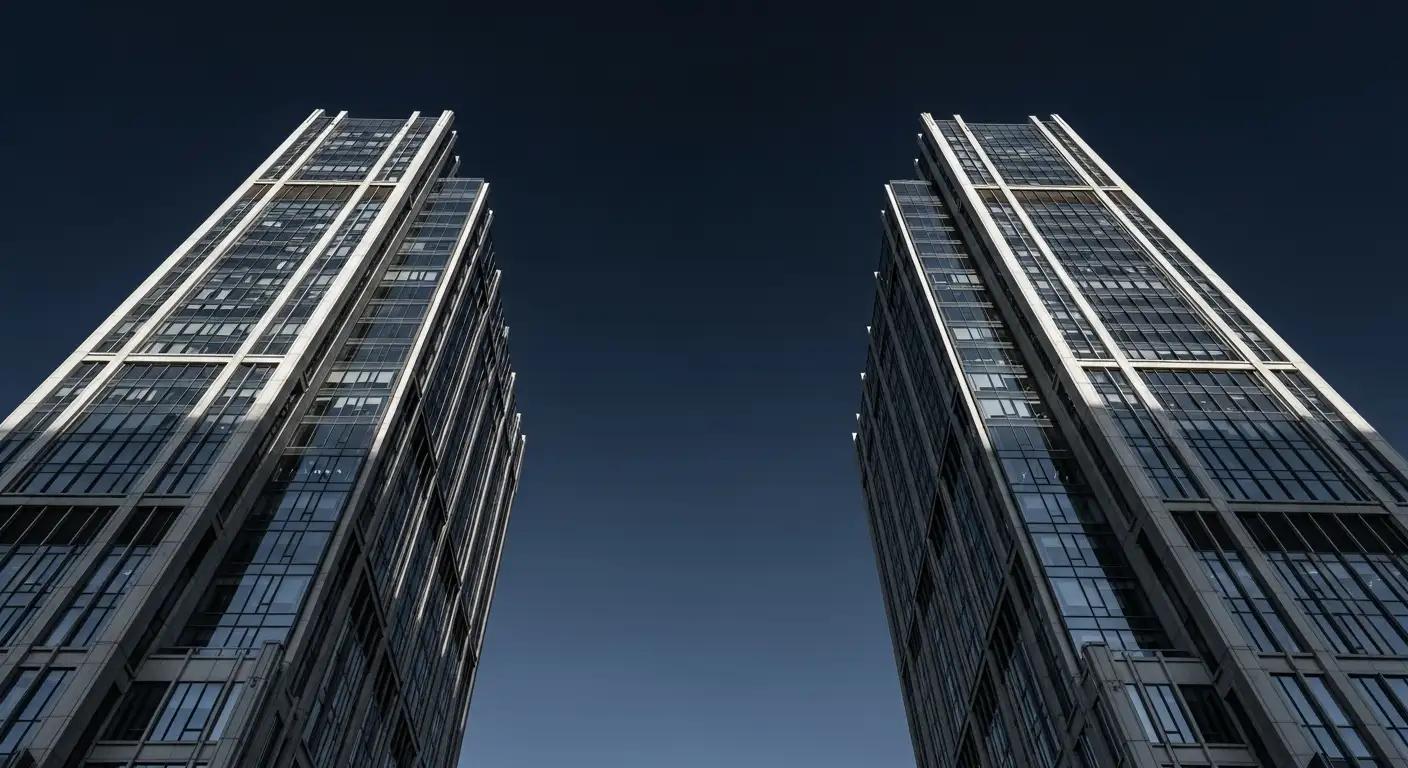
Glass curtain wall and concrete panel systems in Plano's Granite Park and Legacy West Class A towers require specific attention at panel-to-panel joints and anchor embedments — areas where crack propagation intersects with waterproofing system boundaries. We assess the full condition before specifying materials.
Concrete Resurfacing & Overlay
Polymer-modified overlays restore widespread surface deterioration on structurally sound slabs at lower cost than replacement. For Plano's high-traffic corporate campuses — Toyota's seven-building complex, the Frito-Lay campus, multi-building Granite Park towers — entry plazas, pedestrian corridors, and parking structure decks are primary candidates for resurfacing after three-plus decades of exposure.
The $1B redevelopment of the former J.C. Penney HQ into The Park at Legacy — 1.8M sq ft, 50 acres — represents a concrete resurfacing scope where surface quality across the entire campus must be brought to the standard that repositioned Class A tenants expect.
Structural Strengthening
Where corrosion, impact, or design-life expiration has reduced a structural member's load capacity, we restore performance using carbon fiber reinforced polymer (CFRP) wrap, near-surface-mounted reinforcement, or engineered steel plate bonding — adding significant capacity without major dead load increase or disruption to building systems.
AT&T's incoming $1.35B global HQ at 5400 Legacy Drive (announced January 2026, targeting 2028, up to 10,000 employees) creates competitive pressure across the entire Legacy corridor — adjacent building owners whose concrete systems are aging have a narrow window to restore them before the comparison becomes unfavorable.
Industries We Serve in Plano
Why Plano Commercial Buildings Need Concrete Repair Now
The Legacy Business District's first buildings date to Frito-Lay's 556,000-sq-ft campus arrival in 1985 — now 40 years of continuous exposure. The median year built for Plano's entire commercial stock is 1993, meaning a large cohort of buildings has crossed the 30-year threshold where original sealant and waterproofing systems, designed for 20–25 year service life, are past due for systematic replacement and the concrete they were protecting has absorbed moisture accordingly.
The May 2024 North Texas hail event ($2.3B+ in regional damage) and June 2023 storms ($7–10B in insured losses) represent back-to-back impacts on Plano's high density of Class A glass curtain wall towers — buildings where post-storm concrete inspection is a recurring annual expense, not a one-time event. Any concrete that absorbed impact energy without immediate assessment is now on an accelerated deterioration timeline.
AT&T's $1.35B global HQ arrival (announced January 2026, up to 10,000 employees targeting 2028) reshapes the entire Legacy corridor's competitive landscape. Building owners in the surrounding 2,665-acre district face a clear choice: restore aging concrete systems to Class A standard now, or lose ground to the new benchmark AT&T's campus will set.
Announced January 2026 — 54 acres, targeting 2028, up to 10,000 employees; resets Legacy corridor standards
Frito-Lay's 556,000-sq-ft facility — 40 years of concrete exposure on the district's founding campus
North Texas hail event — Plano's Class A tower density makes post-storm concrete inspection a recurring need
Why Choose Griffin Restoration
Commercial exterior restoration since 2000
Licensed in TX, OK, AR, and LA
56' and 72' — self-performing capability
Full coverage for commercial projects
Commercial Concrete Repair FAQ
What causes concrete spalling on commercial buildings?
Concrete spalling begins when moisture infiltrates the concrete matrix, reaches embedded steel reinforcement, and causes corrosion — the resulting expansion fractures the surface. In Plano's Legacy Business District, where the median year built is 1993 and the oldest major campus (Frito-Lay's 556,000-sq-ft facility) has been exposed since 1985, original waterproofing membranes and sealant systems have long exceeded their 20–25 year designed service life. The May 2024 North Texas hail event caused $2.3 billion in regional damage; any concrete that absorbed 2024 hail impact is now more permeable than its design intended — a direct accelerant for spalling on aging Class A campuses.
How do you repair structural concrete on a parking garage?
Structural parking garage repair begins with a full condition survey — sounding, core sampling, half-cell potential testing — to quantify active corrosion zones and delaminated area. We remove deteriorated concrete by hydrodemolition or mechanical chipping, treat exposed rebar with corrosion inhibitor, restore section geometry with engineered repair mortars, and install traffic-bearing waterproofing membranes on deck surfaces. Our 56' and 72' boom trucks handle multi-level parking structure access without full scaffold installation. For Plano's large campus parking structures — Toyota's seven-building LEED Platinum campus covers ~2.1M gross sq ft — we develop multi-year phased programs that work around campus operating schedules.
What is the difference between concrete patching and structural concrete repair?
Concrete patching replaces lost surface material and stops immediate visible deterioration. Structural concrete repair restores load-carrying capacity, addresses active rebar corrosion, and ensures the repaired member meets its original engineering requirements. For Plano's Legacy and Legacy West corridors — where Class A corporate tenants like Toyota (4,000+ employees), AT&T (targeting 10,000 at the new $1.35B campus), and JPMorgan Chase maintain exacting maintenance standards — a structural repair specification with engineering oversight and owner documentation packages is the expectation, not the exception.
Can concrete repairs be done in phases to keep the building operational?
Yes — phased repair coordinated with building operations is standard practice for occupied corporate campuses. We sequence work by parking level, building bay, or exterior elevation to maintain access for employees and visitors throughout. For high-visibility corporate facilities like Toyota's Plano campus — the largest commercial LEED Platinum project in Texas — we develop detailed logistics plans and communication timelines so facilities teams can manage tenant expectations during any concrete repair work.
What does commercial concrete repair cost per square foot?
Surface spall and delamination repair typically ranges $15–$45 per square foot depending on removal depth, substrate condition, access, and finish requirements. Crack injection is priced per linear foot. Structural strengthening with CFRP or steel plate bonding is scoped per member. Large campus facilities in the Legacy District benefit from economy of scale across multiple buildings. The former J.C. Penney HQ — now The Park at Legacy, 1.8M sq ft under $1B redevelopment — is an example of a property where a comprehensive concrete condition survey across multiple structures is the only defensible starting point. Call us for a site assessment.
Serving Plano and the DFW Metroplex — see all DFW service areas
Related Services
Commercial concrete repair often works alongside these complementary services.
Parking Garage Repair
Parking structures require specialized concrete repair scopes addressing traffic-bearing decks, spandrel beams, and column bases. We handle structural repair and waterproofing membranes as a single coordinated scope.
Explore parking garage services →Commercial Waterproofing
Repaired concrete must be protected from the moisture that caused the original failure. We coordinate waterproofing application as part of any concrete repair scope to eliminate redundant mobilization costs.
Learn more about waterproofing →Exterior Building Repair
Concrete repair often reveals adjacent masonry, caulking, or facade issues. Our full exterior restoration capability means we can address the complete building envelope in one mobilization.
See our exterior repair capabilities →Protect Your Plano Property
Whether you manage a Legacy District corporate campus, a Granite Park Class A tower, or a multi-building industrial facility — we'll assess your concrete repair needs and provide a detailed scope of work.